
Why declutter your home?
Many of us know that slightly anxious feeling when our homes start to feel a little too busy. Clutter is part of life, and plenty of people fall into the trap on a regular basis. A clearer space can feel calmer, and it can give you more room to live.
Decluttering can change how your home works day to day. You can move around more freely. You can also spot what you own, and what you can let go of.
1. Recognise why you want to declutter
Decluttering is essential for creating a more organised and stress-free living environment. When you declutter your house, you eliminate unnecessary items and can enhance the functionality of your space, making it easier to find and use what you need. A decluttered home is visually appealing and can create a sense of calm and order, making it a more enjoyable place to live.
2. Notice the Psychological Benefits of Decluttering
Decluttering has significant mental health benefits. A tidy space can:
-
Reduce stress and anxiety
-
Help you focus better
-
Make you feel more in control of your surroundings
-
Boost your mood and overall well-being
-
Contribute to a more positive and productive mindset
When your home is clutter-free, relaxing and enjoying your space is easier. Conversely, a cluttered environment can begin to feel claustrophobic and stressful. For most, this isn't a healthy environment to live or work in - so why do we do it?
3. Create a Decluttering Plan
To avoid feeling overwhelmed, developing a house declutter plan is important. A plan keeps things manageable. Large piles feel bigger when you try to tackle everything at once. Skip the urge to rush. Take a breath and map out your first hour.
Clear goals
-
Set clear goals and timelines for each room or area in your home
-
Pick a specific target, like clearing one shelf or one drawer.
Break it down
-
Work room by room, or category by category.
-
Finish one small section before moving on.
4. Start Sorting Household Items
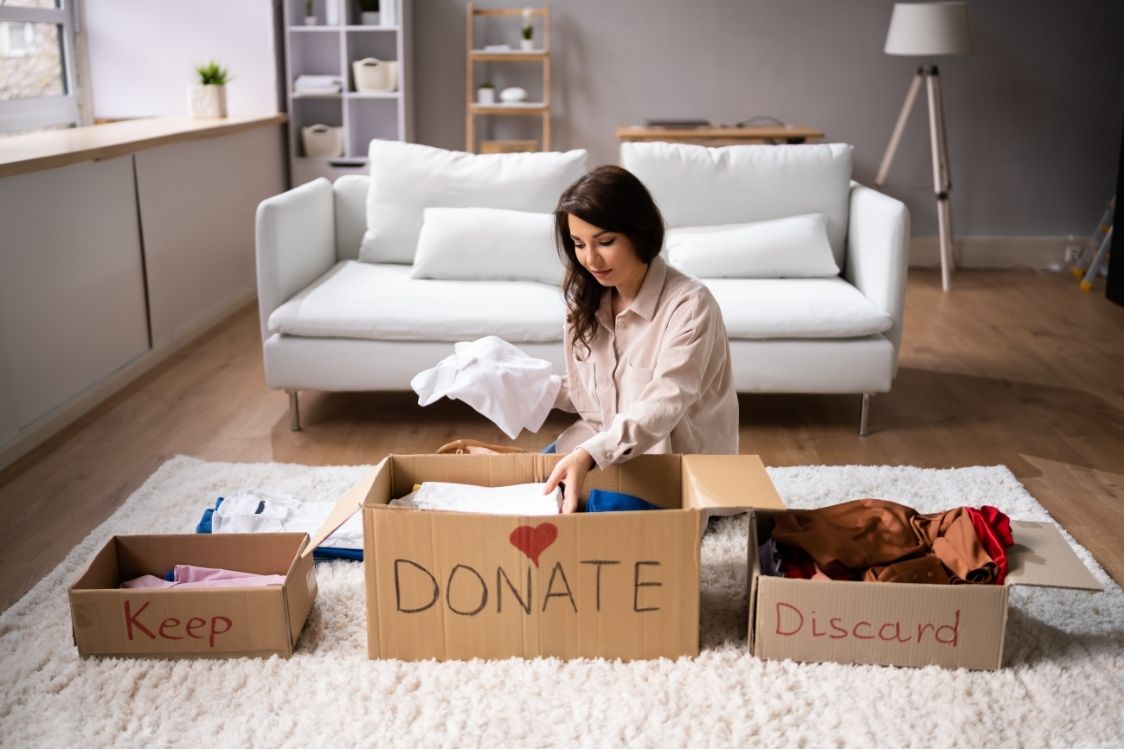
Begin by sorting your household items into categories: keep, donate, recycle, and discard. Use clear bins with labels for each category to keep the sorting organised and efficient.
Honest choices
Keep what you use, need, or value. Be honest with yourself about what you use and value, and avoid keeping items out of guilt or obligation. It’s also a good time to note approximate values for important items. See our house contents valuation guide for more information.
5. Handle Sentimental Items
Dealing with sentimental items can be challenging. Emotional attachment to possessions can make it difficult to part with items, even those we rarely use. It's essential to balance this attachment with the need to declutter.
Keep only the most meaningful items and find creative ways to preserve memories without retaining physical clutter.
That growing ‘just in case’ pile
You open the press in the spare room, and there it is: the box of your eldest's baby clothes you've kept for 5 years. You know you need the space, but you can’t bring yourself to part with them. Sorting what to keep from what to donate feels overwhelming when every tiny jumper holds a memory.
Preserve memories
Take photos of items you cannot keep. Save a small “memory box” for a few pieces that matter most.
Let go kindly
Donating or throwing away items with sentimental value is never easy, especially if they once belonged to someone no longer with us. We often hold onto items "just in case" we need them later, but this mentality can become a major clutter trap.
Even though you never use or rarely see some items, it can be painful to say goodbye. The bottom line is that it's impossible to keep everything. Retain a few of the most treasured objects, but accept that it's probably time to say goodbye to the majority you're holding on to.
6. Consider Hiring Professional Organisers
If you find the decluttering process overwhelming, consider hiring professional organisers.
Expert support can speed up the hiring process
Extra support can speed things up. They can provide expertise and motivation, offering personalised solutions tailored to your specific needs. Professional organisers can help you create a more efficient and functional living space, making decluttering more manageable and less stressful.
7. Donate Unwanted Items
Donating unwanted items to charitable organisations helps you declutter and benefits the community. Research local donation centres to find out what types of items they accept. Commonly accepted items include clothing, furniture, household goods, and toys. Donating unwanted items can give them a new life and help those in need.
8. Keep a Clutter-Free Space Going
Maintaining a clutter-free home requires regular decluttering sessions and practical storage solutions. Develop new habits to prevent clutter from accumulating again.
One-in one-out
For example, adopt a one-in, one-out policy, where you donate or discard an item every time you bring a new one into your home. Before purchasing new items, ask yourself mindful buying questions: Do I really need this? Where will I store it? Will it add genuine value to my life?
Review often
Do a quick scan every few weeks. Focus on hotspots like hall tables, kitchen counters, and wardrobes.
9. Decluttering Specific Areas
Different areas of your home present unique decluttering challenges. Here are some tips for common problem areas:
Kitchen
-
Remove duplicates and unused gadgets.
-
Group items by how often you use them.
-
Check best-before dates and clear out old food.
Bedroom
-
Sort clothes by season.
-
Donate items you have not worn in a year.
-
Use drawer dividers and under-bed storage.
Living Room
-
Keep decor to a few meaningful pieces.
-
Use baskets or storage ottomans for small items that drift.
Garage
-
Group tools and hobby items together.
-
Clear broken gear.
-
Avoid shifting indoor clutter into the garage.
10. Cut Down Paper Clutter
Paper builds up fast with bills, letters, and school notes. Here are some effective methods to manage it:
Digitise documents
Scan and store essential documents electronically to reduce physical paper clutter. This approach also helps manage digital clutter by creating an organised system for your electronic files.
Filing system
Use labelled folders or a filing cabinet to organise and store necessary paper documents. Schedule regular reviews of your paper items to discard unnecessary documents and keep only what is needed.
Which decluttering method suits you?
To avoid feeling overwhelmed, developing a structured decluttering plan is crucial.
Break the process into manageable steps and tackle one room or category of items at a time.
Storage helpers
-
Baskets and storage ottomans for quick tidy-ups
-
Boxes or bins for sorting categories
-
Drawer dividers and under-bed storage
-
Pegboards and shelves for garages
-
Labelled folders or a filing box for paperwork
Protect Your Home with 123.ie Home Insurance
Decluttering your home can lead to a more organised, functional, and stress-free living environment. Following these steps to declutter your home, you can enjoy the many benefits of a clutter-free home.
Clearing away the endless clutter is a habit that brings a home back to life and reveals what items you truly care about. Protecting your property and cherished belongings should be your next priority.
If you want to review cover options, take a look at 123.ie Home Insurance.